Plant Life Cycle for Kids: Free Activities & Lesson Plans
Explore the plant life cycle with free interactive activities, hands-on experiments, and a printable worksheet. Preview our complete 5-day lesson plan for 2nd-3rd grade.
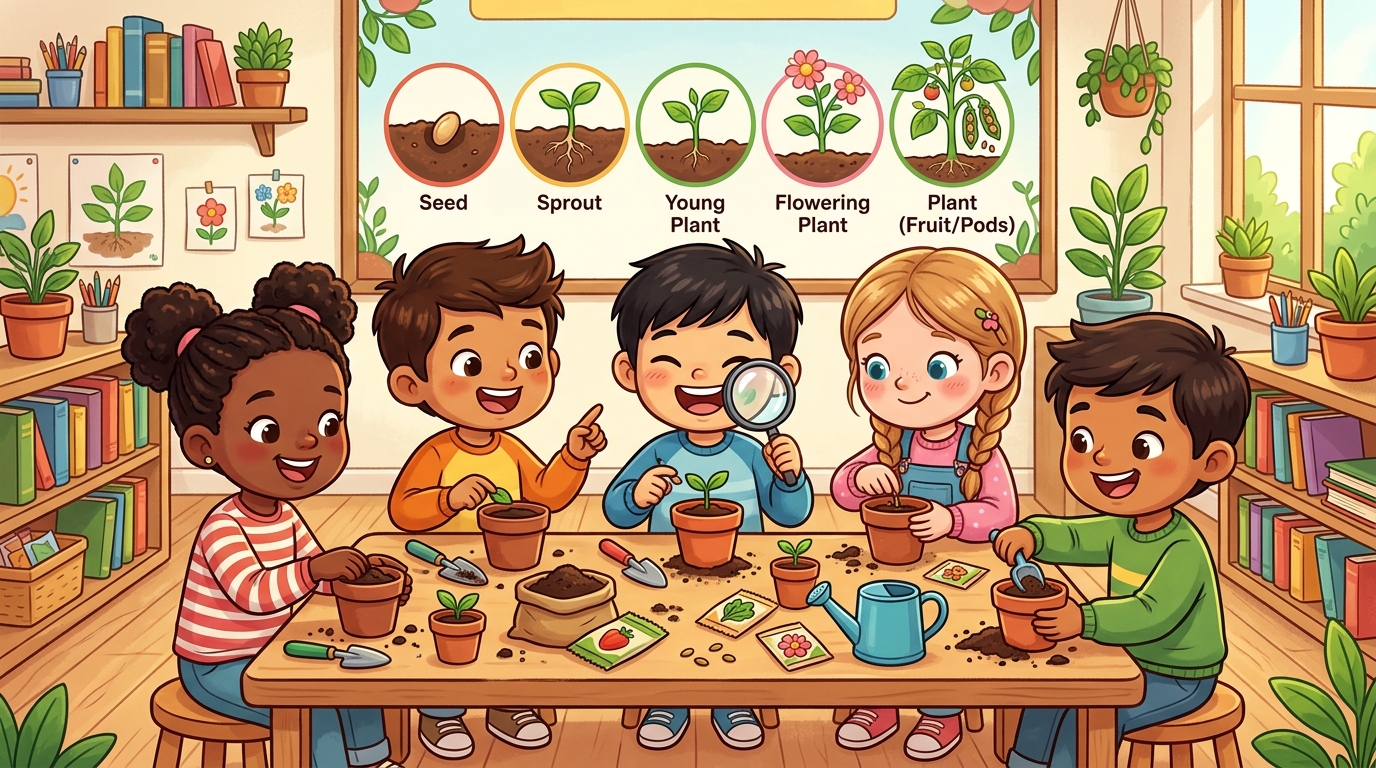
Every plant follows a life cycle — it starts as a tiny seed, grows into a plant, makes flowers and fruit, and then creates new seeds to start all over again. Whether you're teaching this in a classroom or exploring at home, we've got free activities, experiments, and a complete lesson plan to make the plant life cycle come alive for kids.
The 5 Stages of the Plant Life Cycle
Before we get into the activities, let's review the five stages every plant goes through:
1. Seed
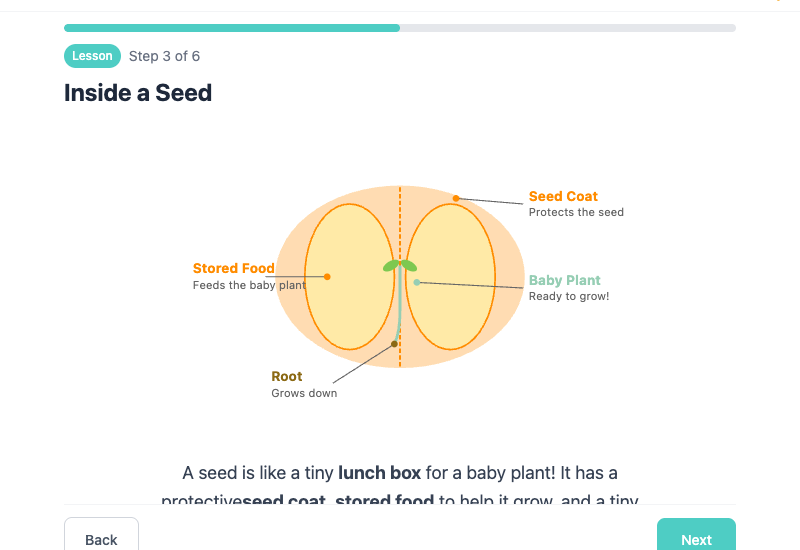
A seed is like a tiny lunch box for a baby plant. Inside, there's a protective seed coat, stored food (cotyledons), and a tiny baby plant (embryo) waiting to grow. Seeds come in all shapes and sizes — from a tiny poppy seed to a massive coconut!
2. Sprout
When a seed gets water, warmth, and the right conditions, it starts to germinate. A small root pushes down into the soil, and a tiny shoot pushes up toward the sunlight. This first little green shoot is called a sprout.
3. Young Plant (Seedling)
As the sprout grows, it develops leaves that start making food from sunlight through a process called photosynthesis. The stem grows taller, and the roots spread deeper into the soil to find water and nutrients.
4. Flowering Plant
When the plant is fully grown, it produces flowers. Flowers are more than just pretty — they're the plant's way of making new seeds! Flowers contain pollen, and when pollen moves from one flower to another (a process called pollination), seeds begin to form.
5. Fruit & Seeds
After pollination, the flower develops into a fruit that protects the seeds inside. When the fruit falls to the ground, gets eaten by an animal, or blows away in the wind, the seeds find new places to grow — and the whole cycle starts again!
Free Interactive Activity: Life Cycle Ordering
Want your students to practice what they've learned? Try our free interactive lesson where kids drag and drop the life cycle stages into the correct order on their tablets or computers.
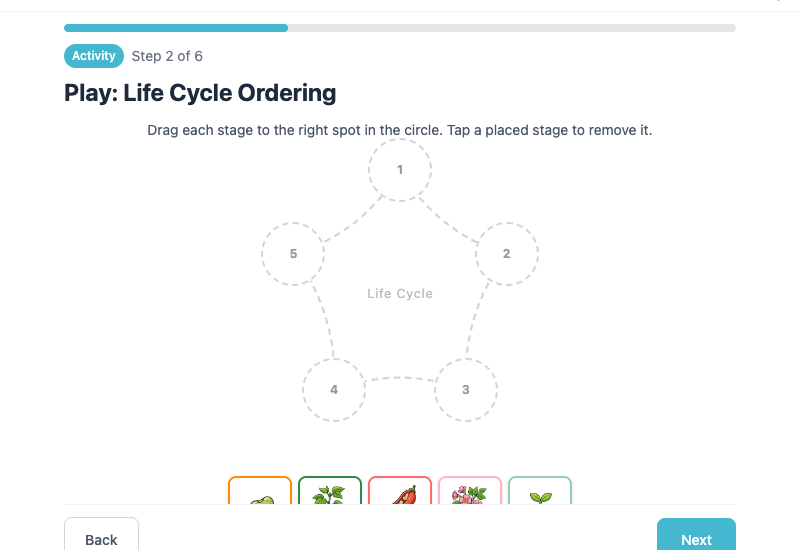
Try the Free Interactive Lesson →
Day 1 is completely free — students get the intro slides, the ordering activity, a Build a Seed explorer, vocabulary flashcards, and a fun fact!
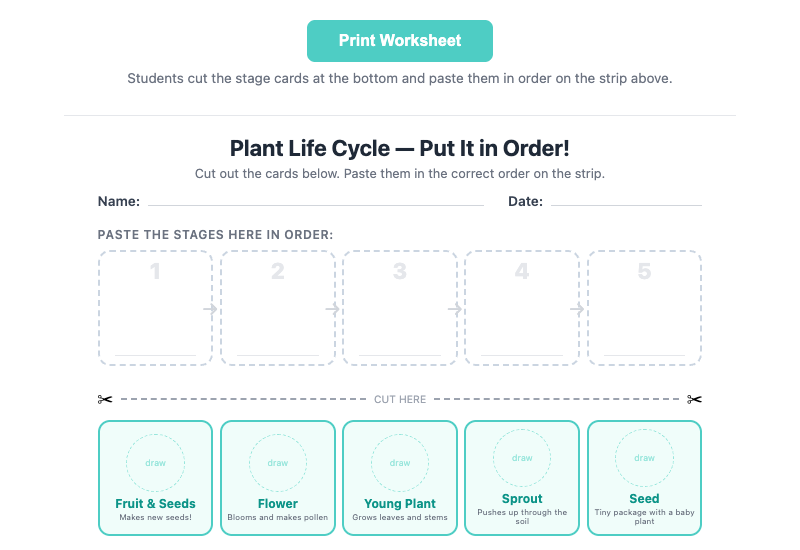
Free Printable: Life Cycle Sequencing Worksheet
Need a paper activity for your classroom? This cut-and-paste sequencing worksheet is perfect for reinforcing the lesson. Students cut out the stage cards at the bottom and paste them in the correct order.
3 Hands-On Experiments to Try
Nothing beats getting your hands dirty! Here are three experiments you can do with everyday materials.
Experiment 1: Dissect a Seed
Materials: Dried lima beans, cup of water, paper towel, magnifying glass (optional)
What to do:
- Soak the lima beans in water overnight.
- Gently peel off the outer skin — that's the seed coat!
- Carefully split the bean in half.
- Look for the tiny plant inside.
- Find the two big halves — those are the stored food (cotyledons).
Think about it: What does the seed coat feel like? Can you see the tiny baby plant inside?
Fun fact: A coconut is one of the biggest seeds in the world!
Experiment 2: Grow a Seed in a Bag
Materials: Ziplock bag, paper towel, 2-3 bean seeds, water, tape
What to do:
- Wet a paper towel until it's damp (not dripping).
- Place the seeds on the paper towel.
- Fold the towel and put it inside the bag.
- Tape the bag to a sunny window.
- Check every day and add water if the towel dries out.
Think about it: What do you see after 3 days? Which part grows first — the root or the shoot?
Fun fact: Some seeds can survive for hundreds of years! Scientists grew a 2,000-year-old date palm seed.
Experiment 3: Be a Pollinator
Materials: Cotton swab or small paintbrush, 2 or more flowers (real, from a garden)
What to do:
- Gently touch the center of one flower with the cotton swab.
- Look at the swab — can you see yellow powder? That's pollen!
- Carefully carry the swab to another flower.
- Touch the center of the second flower with the pollen.
Think about it: What did the pollen look like on the swab? How do real bees carry pollen?
Fun fact: A single bee can visit up to 5,000 flowers in one day!
Want printable experiment cards and observation journals? They're included in the full lesson plan.
Inside the Full 5-Day Lesson Plan
Our complete Plant Life Cycle lesson gives you everything you need for a full week of engaging science instruction. Here's a peek at what's inside:
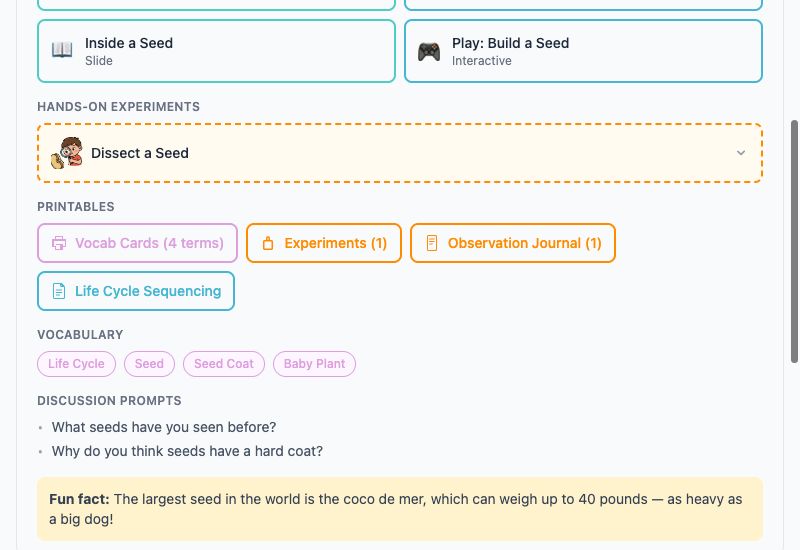
Teacher Dashboard
Your command center for the entire unit. Each day is laid out with learning objectives, slides you can project on your smartboard, interactive activities for student devices, hands-on experiments with full materials lists, printable worksheets, vocabulary cards, and discussion prompts.
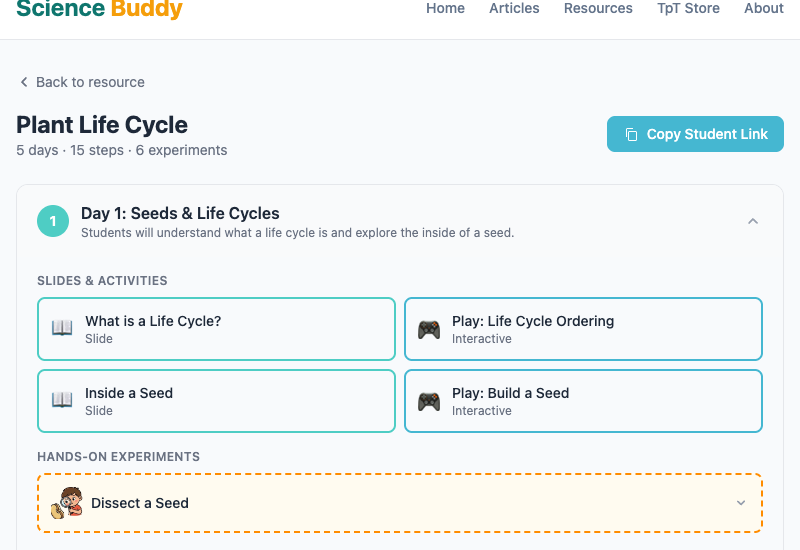
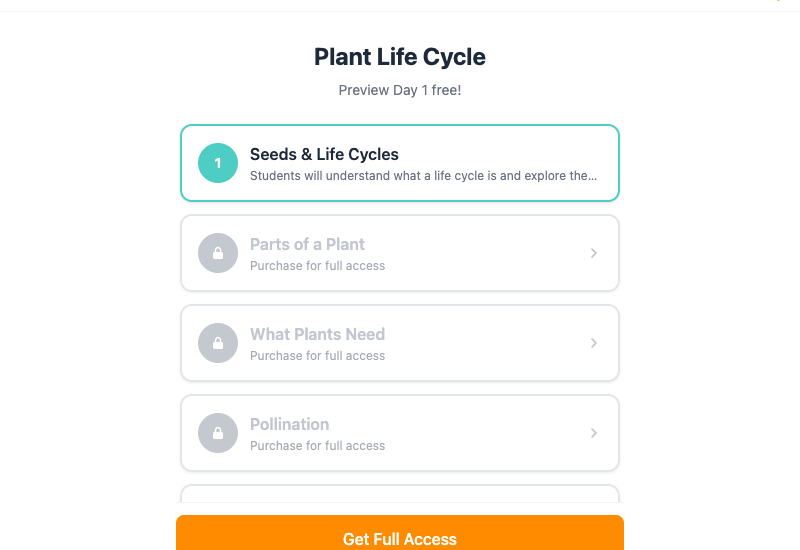
Student Day Picker
Students see a clean, kid-friendly interface. Each day is a simple button — tell your class "Click Day 3 today" and they're off!
Interactive Slides & Activities
Each day mixes teaching slides with interactive activities. Kids learn a concept, then immediately practice it with drag-and-drop games, labeling diagrams, and sorting challenges — all on their tablets or Chromebooks.
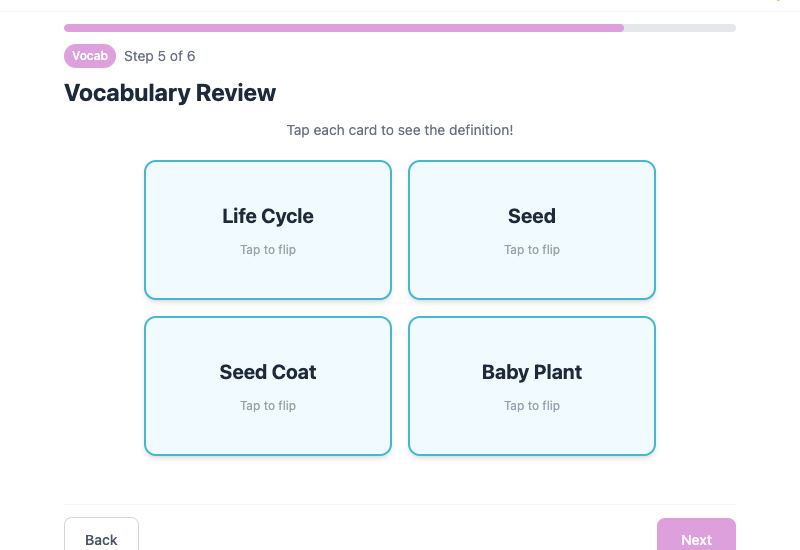
Vocabulary Flashcards
Every day ends with tap-to-flip vocabulary cards that reinforce the key terms students learned.
What's Included
- 5 daily lesson plans with learning objectives
- 8 teaching slides (project on your smartboard)
- 6 interactive drag-and-drop activities
- 6 hands-on experiments with printable cards
- 20 vocabulary flashcards
- 3 printable worksheets
- Observation journals for experiment days
- Discussion prompts for each day
- Fun facts to spark curiosity
Get the Full Lesson
Ready to bring the plant life cycle to life in your classroom?
Preview the Free Student Demo → — Try Day 1 completely free!
Get Full Access on Teachers Pay Teachers → — Unlock all 5 days for your class.
Looking for more science lessons? Try our free Butterfly Life Cycle interactive lesson, or explore our Forms of Energy lesson on light, sound, and heat!