What Makes Fireworks Different Colors?
Red, blue, green, gold — each firework color comes from a different metal burning inside! It's the same science that makes flame tests work in chemistry class.

BOOM! CRACKLE! SPARKLE! 🎆
Fireworks light up the night sky with dazzling reds, blues, greens, and golds. But have you ever wondered: how do they make all those different colors?
Is it paint? Food coloring? Magic?
Nope! It's chemistry — and it all comes down to metal atoms getting really, REALLY excited. Let's light this one up!
The Secret Ingredient: Metals!
Every firework color comes from a different metal compound (a chemical made with metal atoms). When these metals get super hot, their atoms absorb energy and then release it as colored light.
Here's the color chart:
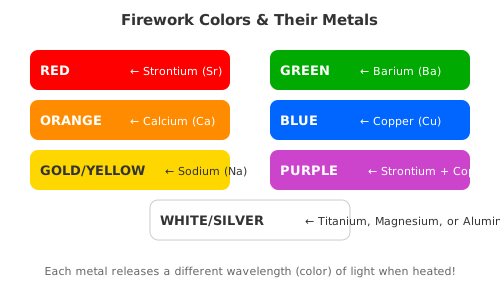
Fun Fact! Blue is the HARDEST firework color to make! The copper compounds that create blue are very fragile and break down easily at high temperatures. Firework makers consider a perfect blue their ultimate challenge!
But WHY Do Different Metals Make Different Colors?
This is where it gets really cool (well, really HOT)!
Every atom has electrons — tiny particles that zoom around the outside of the atom. Normally, electrons hang out at their regular energy level (their "home").
When the metal gets super heated in a firework:
- Electrons absorb energy and jump up to a higher level (they get "excited")
- But they can't stay there — they immediately fall back down to their home level
- As they fall back, they release that extra energy as light!
- The color of light depends on how far the electron jumped
Different metals have different-sized jumps, so they release different colors! Strontium electrons make a small jump (red light). Copper electrons make a bigger jump (blue light).
Inside a Firework Shell
A firework is like a carefully designed bomb (a safe one!). Here's what's inside:
- A fuse at the bottom to light it
- A lifting charge (gunpowder) to shoot it into the sky
- Stars — small round pellets packed with metal compounds (these make the colors!)
- A bursting charge in the center to spread the stars apart
- A time-delay fuse so it explodes at the right height
The arrangement of the stars inside the shell determines the shape of the firework — circles, hearts, smiley faces, or even words!
Fun Fact! The largest firework ever launched was in Steamboat Springs, Colorado in 2020. The shell was 62 inches wide (bigger than a person!) and created a burst over a mile across!
How They Make Shapes
The stars are arranged in a pattern inside the shell:
- Arranged in a ring → Creates a circular burst ⭕
- Arranged in a heart shape → Creates a heart burst ❤️
- Multiple layers → Creates rings within rings
- Special timing fuses → Stars change color as they burn (like going from red to blue!)
Sparklers: Handheld Fireworks
Sparklers work a bit differently:
- A metal wire is coated in a paste of iron filings and other metal powders
- When lit, the iron burns in contact with air, creating those beautiful tiny sparks
- The orange-gold sparks are from iron, while white sparks come from aluminum or magnesium
Try It Yourself! 🧪
Rainbow Flame Test (with a grown-up!)
What you need:
- A candle or gas stove burner
- Table salt (sodium chloride)
- A grown-up to supervise! 🧑🔬
Steps:
- Ask an adult to light the candle
- Take a tiny pinch of table salt
- Carefully sprinkle it into the flame
- Watch the flame turn bright yellow! That's the sodium!
Safety note: Only use table salt for this experiment. Other metal compounds can be dangerous. Always have an adult supervise flame experiments!
Other safe things to try:
- Table salt → Yellow (sodium)
- If you can find "fire color packets" at a camping store, they'll turn campfire flames different colors!
Quick Quiz! ✅
Test what you learned:
- What metal makes fireworks red?
- Why do different metals create different colors?
- What is the hardest firework color to create?
(Answers: 1. Strontium 2. Different metals have electrons that jump different amounts, releasing different wavelengths of light 3. Blue — the copper compounds are very fragile at high temperatures)
Keep exploring, Science Buddy! There's always more to discover. 🔬